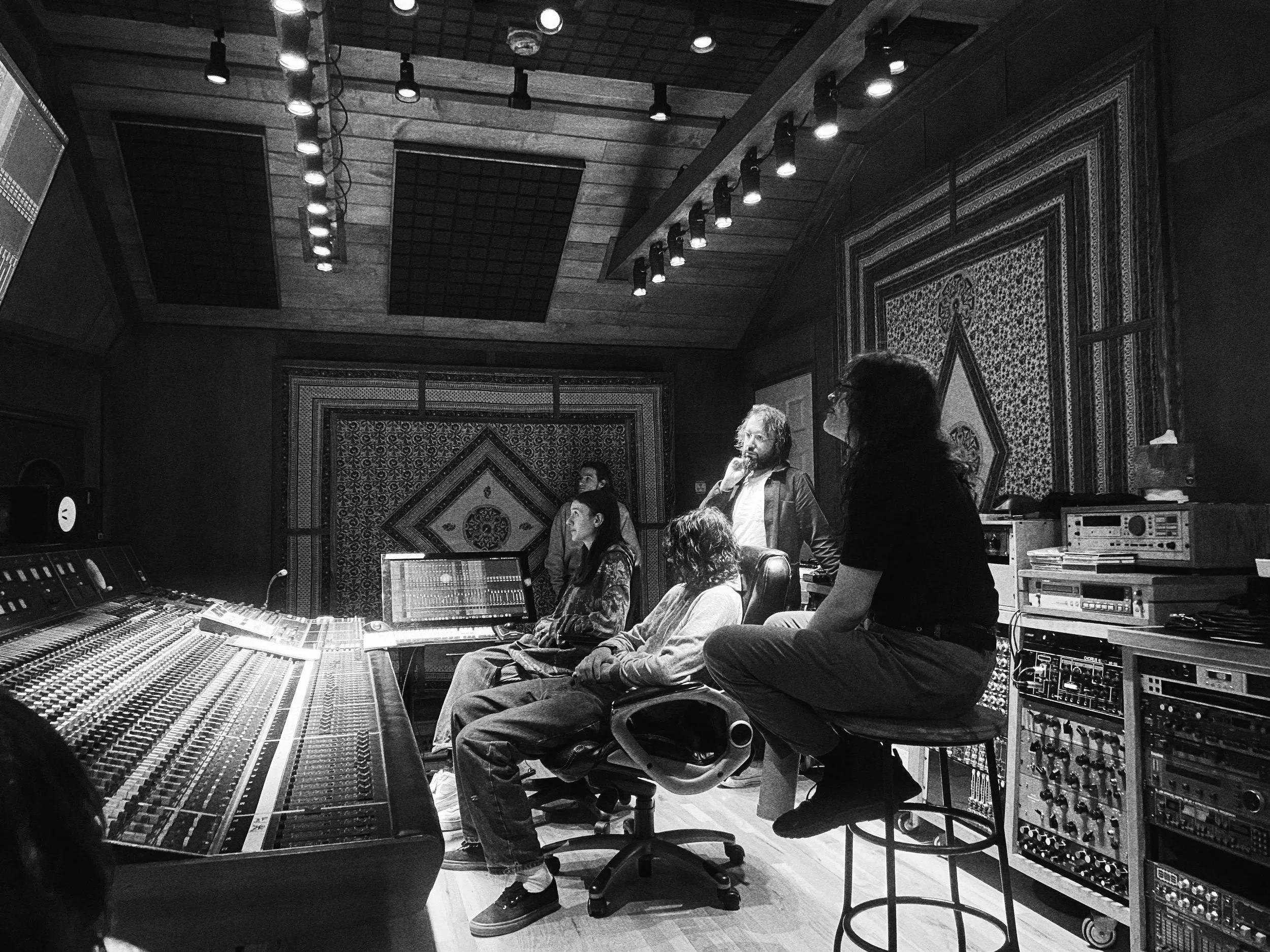
When people ask me what I do and I say “I’m a music producer,” it still feels strange, even after doing it for many years.
When I hear the words “music producer,” I think of people like George Martin (The Beatles), Daniel Lanois (Bob Dylan, Emmylou Harris) or Nigel Godrich (Radiohead, Beck) who produced some of my favorite records. In my head, I’m still the same kid who’s fascinated with making records.
Regardless of what I’m thinking, I usually get a blank stare, followed by questions like, “You make CDs? I didn’t know people still made CDs.”
What does a music producer actually do?
What a music producer actually does varies depending on the producer and the project. But at the core, we’re professional “music make-it-happen-ers.”
A producer helps an artist turn ideas into finished records. That can mean helping shape songs, supporting performances, and guiding the project from its earliest form to its final version. Whether it’s an artist’s first recording or their tenth album, it helps to have someone who can champion their ideas and help bring them to completion.
A producer’s role can change depending on the artist and the music. But most of the work falls into a few core areas.
Not all producers do all of these things. But these are some of the ways a producer can help move a project forward.
World Building and Sonic Identity
A producer helps create the sonic world a song lives in. Among many things, this can mean:
choosing textures and tones
It can mean deciding what to add and what not to add
helping define whether a record feels intimate, raw, polished, or expansive
The aim is to protect the core of the song and the artist’s vision, and deliver a version that feels true.
Coaching performances
One of a producer’s most important jobs is helping artists give their best performances. A producer helps artists get to the take that connects.
Sometimes that means pushing
Sometimes it means getting out of the way
Sometimes it means making the room feel safe enough that the artist can take a risk
A great performance carries more weight than any piece of gear.
Co-writing and helping to craft songs
A producer can be involved in songwriting in different ways, depending on the artist and the project.
Sometimes that means starting from scratch and co-writing with the artist. Other times, it means helping shape songs the artist has already written before they’re recorded.
Many producers are songwriters themselves and work closely with artists, especially in genres where the writing and production process overlap, or with artists who don’t have a band.
Some of the ways a producer can help include:
suggesting arrangement changes
helping clarify verses and choruses
editing songs down to what’s essentialsometimes co-writing when it serves the project
The goal isn’t to change the artist’s song. It’s to help it become clearer.
A Technical Understanding of Sound
Some producers are very hands-on with the technical side of record making, while others work closely with an engineer to help capture the sound.
For me, the connection between what’s happening technically and what’s happening creatively is closely tied to the production itself, so I tend to be hands-on.
Some of the ways a producer applies this understanding include:
analog equipment and signal flow
how the recording environment affects sound
choosing instruments that support the artist’s vision
The faster an idea can be translated into sound, the more creative the process stays.
OK, Computer… working in a DAW
Most records being made today are shaped inside a computer at some point.
A producer often works inside a DAW (or alongside an engineer) to:
edit performances
build arrangements
organize sessions
prepare songs for mixing
This technical fluency allows ideas to move quickly from thought to sound.
Musical Language: Deep Palette and Theory
Being able to play instruments and understand some music theory can help a producer communicate ideas clearly. It’s not essential, but it can be useful.
Some producers play instruments on the records they produce. Others use their knowledge of harmony, rhythm, and form to help convey ideas to musicians.
In both cases, what matters most is a deep palette of music the producer has internalized — a broad knowledge of songs, styles, and sounds built from listening and experience.
Some ways this can show up in a session include:
demonstrating a part
suggesting chord changes
talking about harmony or rhythm
helping musicians stay in the same musical language
This isn’t about showing knowledge or following rules. It’s about clarity in service of the artist’s vision.
Collaborators (Building a Team)
A producer can also help build the team around a record.
Through making records over time, producers often develop relationships with collaborators they trust to help support the artist’s vision.
That can mean bringing in:
an engineer
session musicians
co-writers
a mixing engineer
a mastering engineer
Sometimes a project needs more than one set of hands. Sometimes it takes a village.
Producer vs Engineer vs Mixer
These roles often overlap, but they are not the same.
A producer focuses on the creative direction of the project — the songs, the performances, and the overall feel of the record. They work closely with the artist to ensure ideas are explored and the vision is supported. They also help build the team around the project.
When a label or management is involved, the producer often acts as a liaison with A&R and managers to help keep the project moving forward.
An engineer focuses on capturing sound — microphones, signal flow, and making sure the recordings meet both the artist’s and producer’s expectations.
A mixer takes the recorded tracks and finished production and balances them so the ideas translate as intended. Sometimes a mixer’s role is to change very little. Other times, it’s to reshape and enhance what they are given.
Sometimes one person fills more than one of these roles, especially in modern indie music where budgets are smaller and producers often have the skill set to handle multiple aspects of the record-making process.
A final step is the mastering engineer, whose specialized role is to ensure that the artist’s, producer’s, and mixer’s work translates clearly into a finished, releasable version.
Why artists work with producers
Artists work with producers for perspective.
When you’re inside your own songs, it can be hard to hear them clearly. A producer stands just outside the music and helps notice what’s working, what’s unclear, and what wants more attention.
A producer can also bring structure to the process. Deadlines, decisions, and momentum help projects move forward instead of staying unfinished.
Ultimately, the producer’s role is to help an artist safely explore their ideas, navigate difficult moments, and complete their work.
About me
I’m Ben Rice, a music producer based in Brooklyn, NY. This blog is a place to think out loud about making records and working with artists.
If you’d like to learn more about my work or get in touch, you can find me here.