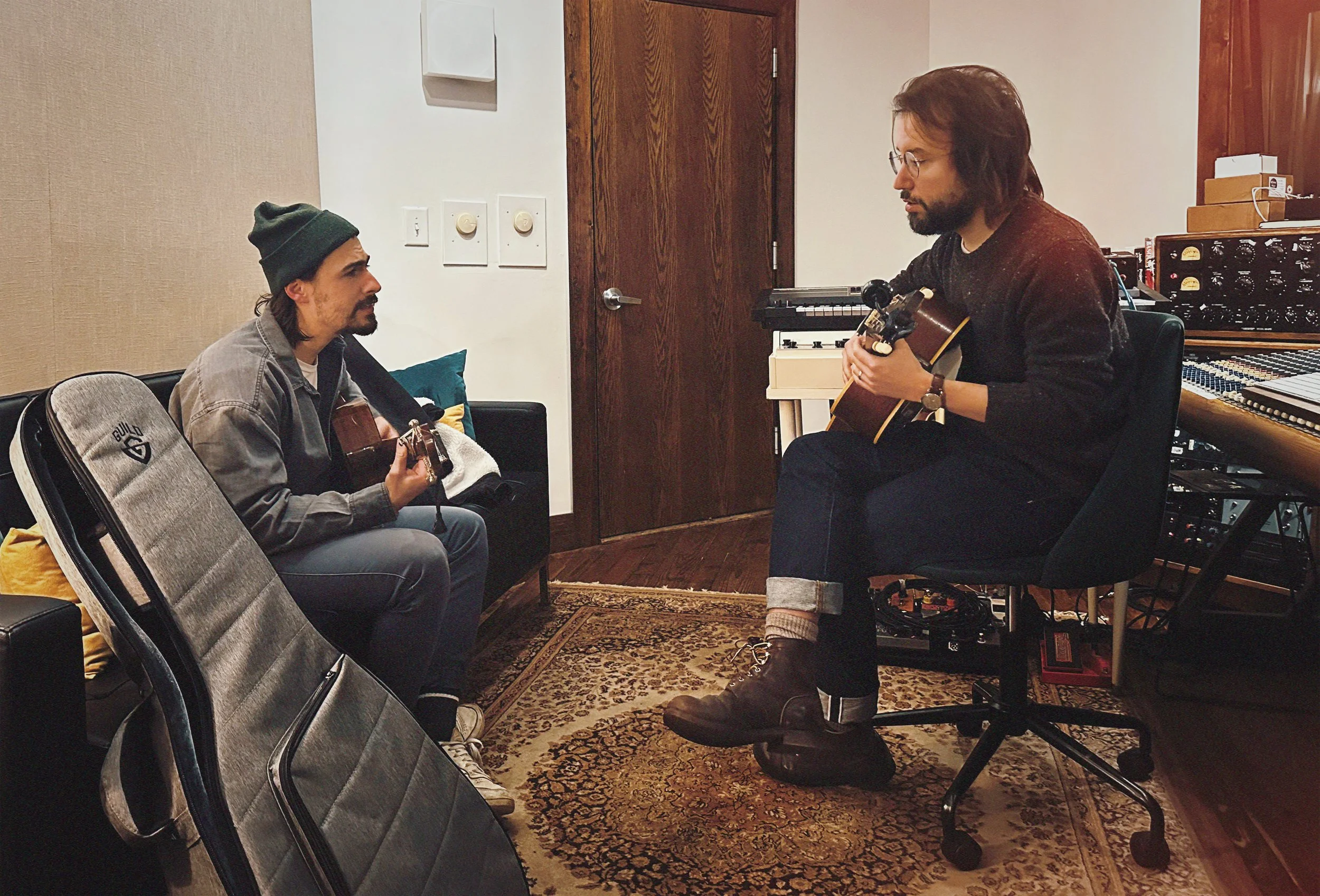
Choosing the “right” music producer can feel daunting. The reality is, there are probably multiple right choices.
If I had to distill it into two guiding thoughts, it would be:
Genuinely like the producer’s work. (A producer shows you how they hear through the records they make.)
Enjoy spending time with them. (You’re going to spend a lot of time together making a record.)
As a producer, those are two of the main things I look for in an artist as well.
They should also be genuinely interested in your music. Making a record can be an incredibly vulnerable process. The producer you choose is often one of the first outside ears to hear your music, and that can feel intimidating.
It’s worth remembering that producers are here to support and champion your art. A producer isn’t there to make an artist famous, and there’s no secret sauce that guarantees a “hit record.” So when you’re looking for a producer, find someone you resonate with on a human and creative level. Don’t worry too much about prestige.
Experienced producers often love working with new and up-and-coming artists (I do). Every project is different. Watching an artist grow — and remembering what that stage felt like — is one of the most rewarding parts of the job.
What Does “The Right Producer” Actually Mean?
There isn’t one universal “right” producer.
The right producer is the one who is aligned with you — your taste, your goals, and the specific record you’re trying to make.
Different projects need different kinds of producers. What matters most isn’t prestige or résumé. It’s alignment.
Musical Alignment
Can They Help Shape Your Sound Without Imposing Their Own?
Whether a producer wants to or not, we all have our own sound. We all have preferences. Over time, that becomes part of the records we make.
Part of finding a good fit is making sure the producer’s natural tendencies are in alignment with the artist’s vision.
That doesn’t mean you need the same taste, references, or experiences. It means the sonic world the producer naturally curates should feel like a place where the artist wants their music to live.
Communication and Trust
Can You Talk Openly With Them?
Finding a producer you feel comfortable communicating with is essential.
Conversations should feel natural and honest. You should be able to ask questions without feeling small. You should be able to disagree.
When discussing the music, it should feel like everyone is working toward a version of the song that feels true — not toward proving a point.
The relationship between artist and producer is collaborative. Ideas move back and forth. Sometimes they evolve. Sometimes they fall away. The best moments often come from that exchange.
Do They Listen?
Making records is, at its core, about listening.
Listening to each other. Listening to ideas. Listening to instincts. Listening to the song itself.
Often the song has the answers before we do.
Patience matters in the studio. Sometimes it takes time for a performance to arrive. Sometimes it takes a few attempts before a version feels right.
Open communication is what allows that process to unfold without tension.
And in that process, a producer can act as a kind of mirror — reflecting the music back to the artist so they can hear it more clearly.
Process and Working Style
How Do They Like to Work?
It’s helpful to understand how a producer approaches their work.
Are they hands-on or hands-off?
Is their approach structured or more loose and malleable?
Do they prefer working in person, remotely, or some combination of both?
Do they rehearse and prepare heavily, or lean into improvisation?
How does their process align with how you work best?
Ideally, the approach feels natural. That said, sometimes a process that doesn’t seem intuitive at first can be exactly what unlocks something new creatively.
Some producers are also songwriters and like to co-write with the artists they work with. Others prefer to leave the songwriting to the artist and focus on how best to represent it in the recording.
Some play multiple instruments and contribute directly to arrangements. Some are programmers or beat makers. Some are highly technical and focused on sound. Some are strong coaches who draw out performances. Many move between several of these roles depending on the project.
It’s worth considering whether their strengths match what your project needs.
A solo artist might benefit from someone who can help build arrangements and play instruments. A band might prefer someone who focuses on capturing and refining what already exists.
There’s no better or worse approach. It’s about alignment in service of the art.
Experience and Perspective
When looking for a producer, it’s important to understand not just what experience — or credits — they have, but what that experience actually represents.
A producer who has taken a smaller artist’s project from start to finish and helped shape a sound that you connect with may be more relevant to your record than someone with a major credit where they played only a small part.
There’s a difference between growing into your career and misrepresenting your role.
Some of my larger credits are projects I carried from beginning to end. Others are records where I contributed in a more specific way — engineering, playing guitar, or tracking drums. I try to be clear about those distinctions so artists have an honest understanding of what I actually do and bring to the table.
Some of my favorite records I’ve worked on have very few streams or accolades. The world may not have heard them yet, but for me and my collaborators they were meaningful. There’s nothing like the moment when the sound coming through the speakers reflects and realizes the artist’s vision.
Big-name credits can be impressive. But they don’t always tell the whole story.
What matters is the work — and the part the producer played in it.
I’ve joked before that producers are essentially “professional music make-it-happen-ers.” Seeing a project through from start to finish is a real skill. Finishing the art matters. Helping an artist stay focused and supported through that process can be a delicate balancing act.
Ultimately, you want someone who can help you complete your vision — put it into the world — and then create something new.
Practical Considerations
Another side of finding the “right” producer is finding someone you can realistically afford.
Whether it’s a label-funded project or self-funded, there are usually budget constraints. Making records can be expensive, and if you’re stressed about the budget going in, that tension can creep into the creative process.
There’s a difference between stretching to make something happen and overextending yourself.
It’s worth finding a producer whose skill set and price point align with where your project currently lives.
Clear expectations matter. You should understand what the producer expects from you, and what you can expect from them. The scope of work should be defined and make sense.
If something feels unclear, ask questions.
For example:
Do they have their own recording studio or a studio that they prefer to work out of?
Is studio time included?
Are session musicians included?
How much time will be dedicated to the project?
How many mix revisions are included?
Sometimes an artist finds the “right” producer and has an album’s worth of material, but doesn’t have the budget to record it all at once. In those cases, it can make sense to start with a single or an EP. That smaller step can also be a way to test the waters and confirm that the collaboration is a good fit.
I’ve often seen singles extend into EPs, and EPs turn into albums over time when the collaboration feels true and momentum builds.
Red Flags and Green Flags
Red Flags
I want to give my fellow producers the benefit of the doubt. Producing is a rewarding job, but it can also be a demanding one. When talking about red flags, it’s worth remembering that producers are human.
That said, your art is personal. It deserves to be surrounded by people who are in a place to support it.
If a producer isn’t listening or communicating clearly before a project begins, that may be a sign the fit isn’t right. If you’re already in the process and communication is lacking, it’s worth bringing it up and having an honest conversation.
If ego starts to overshadow collaboration, that can create problems.
If it feels like a producer is rushing, it’s important to understand why. Sometimes momentum is necessary to keep a project moving. Other times, ideas can be overlooked in haste. Context matters — some projects do have real time or budget constraints that need to be met.
I aim to be open with the artists I work with about timelines and any outside pressures that might affect the process. When deadlines start approaching, it helps to talk about it and, if needed, recalibrate in a way that feels aligned for everyone involved.
Green Flags
Green flags often look simple.
Curiosity
Care
Patience
Clear communication
A producer who is genuinely curious about your ideas. Someone who treats your art with respect. Someone who prepares — listening to demos, learning the songs, bringing references, showing that they’re invested.
Healthy collaboration also requires mutual respect. There are moments when it’s 3:30am and I’m asleep or in family mode and can’t respond to a text. Being human on both sides matters.
Find someone who is present, prepared, and willing to build something real with you. You don’t need someone matching your energy 24/7. In fact, a steady presence can often be a healthy counterbalance in the creative process.
Why This Choice Matters
Deciding which producer to work with is a significant decision.
In many cases, artists only get one opportunity to record a song — and always only one opportunity to record it for the first time. That makes the process meaningful.
Finding someone you feel aligned with to work deeply on something so personal isn’t simple.
The balance of art and commerce can be delicate. Budgets are real. Timelines are real. But even within those realities, the relationship between artist and producer is a creative partnership — not just a service.
When you make records together, you build creative memories. Sometimes long-term friendships. Those experiences can be just as significant as the finished record itself.
Closing Thoughts
There’s no perfect formula for finding the right producer. These are simply things to consider as you do a gut check.
As an artist, it’s important to trust your instinct when it comes to your art — and that extends to the people you choose to collaborate with.
The right producer will understand that. They’ll help create an environment where you can be fully yourself, so the music that comes out feels honest and true.
About me
I’m Ben Rice, a music producer based in Brooklyn, NY. This blog is a place to think out loud about making records and working with artists.
If you’d like to learn more about my work or get in touch, you can find me here.